







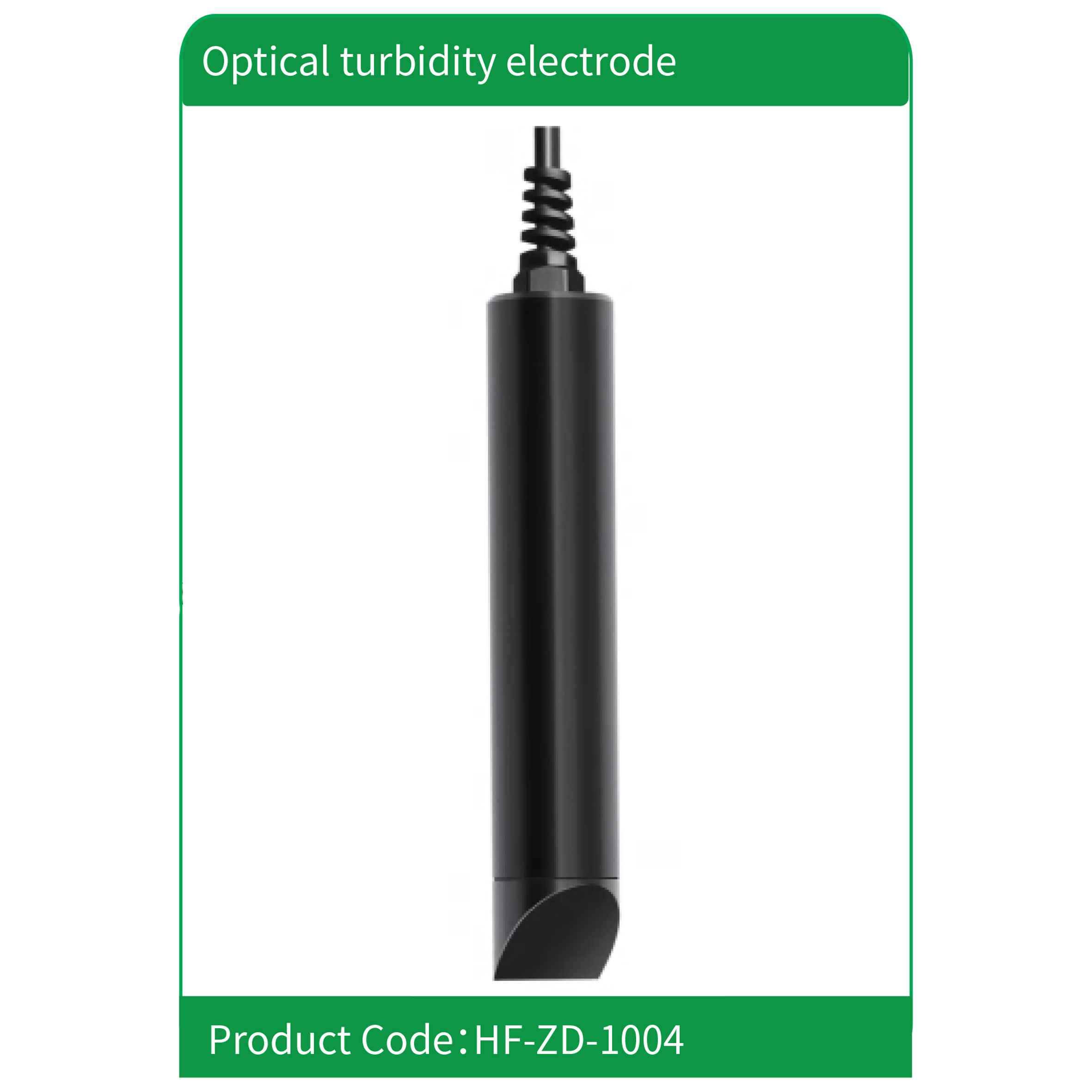
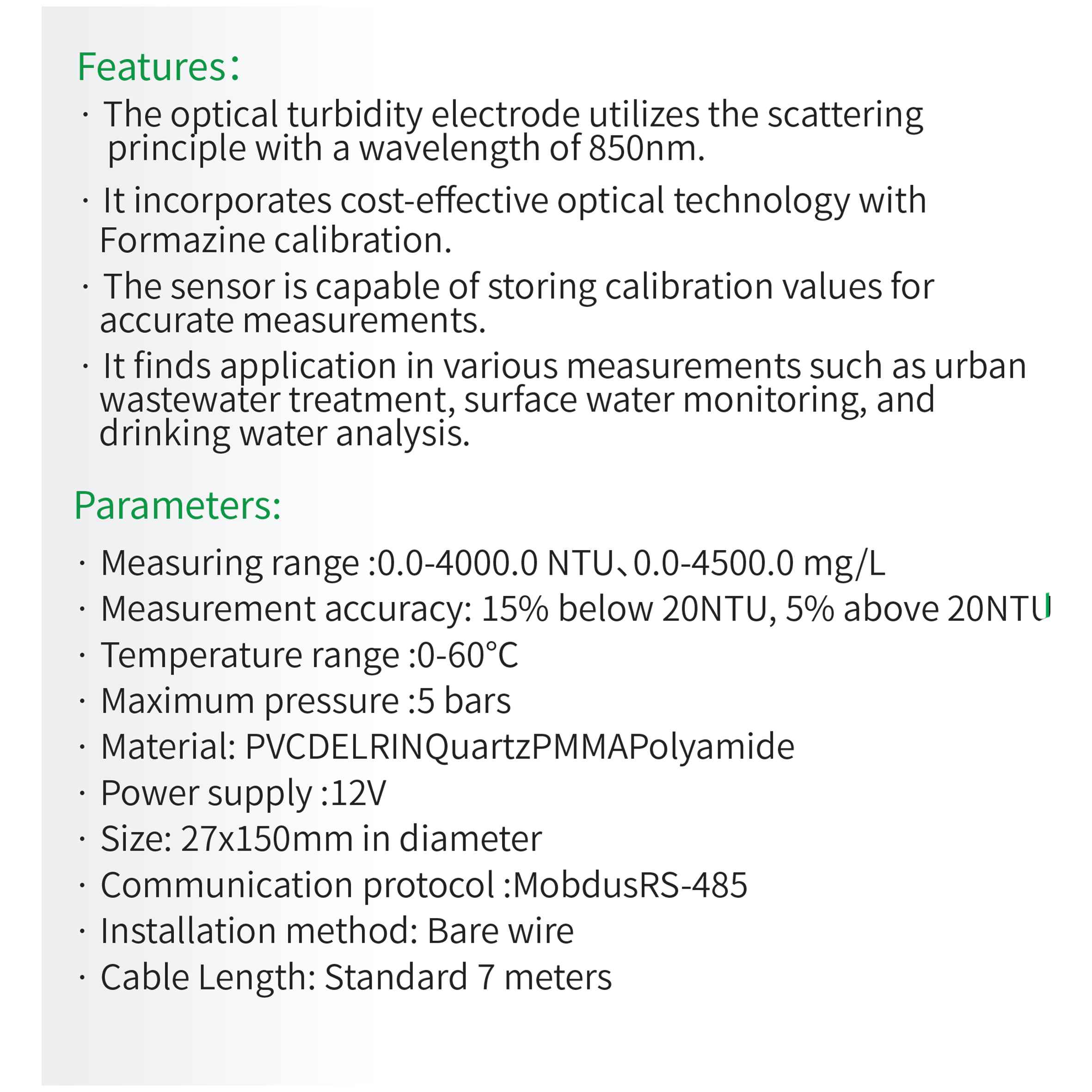
A turbidity sensor is a precision instrument for measuring the amount of suspended particles in water or other liquids. Using optical technology, this sensor measures the amount of light scattered or absorbed by particles in the fluid and provides a number in NTU (Nephelometric Turbidity Units).
Features and Benefits:
- Accurate and real-time measurement: These sensors are capable of continuously measuring turbidity with high accuracy and reporting results in real time.
- Advanced optical technology: Turbidity sensors typically use infrared technology or nephelometric methods, which are not affected by water color and offer higher accuracy in measuring suspended particles.
- Durable and industrial body: These sensors are made of materials resistant to corrosion, pressure, and high temperatures and are very suitable for use in industrial environments and treatment plants.
- Easy maintenance: Many models have self-cleaning systems or are designed to be easy to maintain and calibrate.
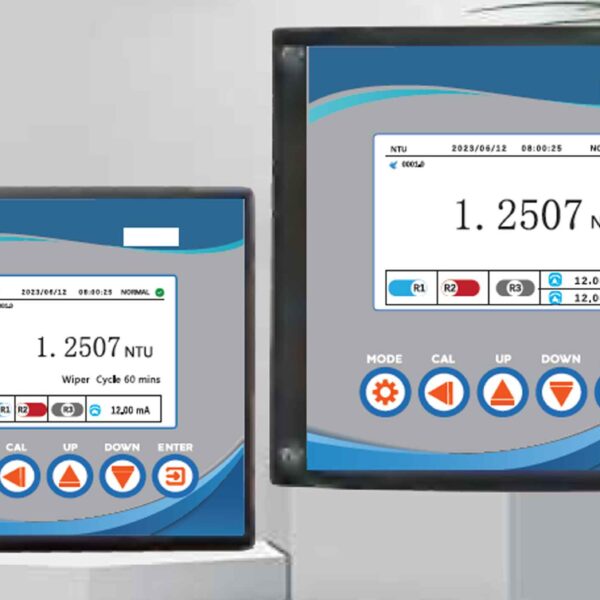
- Connectivity to controllers: The turbidity sensor can be connected to industrial controllers or monitoring systems and send data for analysis or control actions.
- Analog or digital output: It is possible to provide different outputs for connection to PLC, SCADA systems or industrial data loggers.
The need to use turbidity measurement sensors in water purification and industries:
High turbidity usually indicates the presence of silt, bacteria, algae, or other physical contaminants in the water. Accurate turbidity measurements at various stages of treatment, such as raw water inlet, post-filtration, and pre-disinfection, are essential to ensure proper system performance.
For example, in drinking water treatment plants, a sudden increase in turbidity can be a sign of filter failure. In the food and beverage industry, monitoring turbidity is critical for product quality control and compliance with hygiene standards.
Overall, a turbidity sensor is a key tool for monitoring the quality of water and liquids in real time, helping to improve system performance, reduce the risk of contamination, and ensure the quality of the final product.
Reviews
There are no reviews yet.